
 2026.05.21
If 2023 was the year mRNA cancer vaccines rekindled hope, then 2026 is the year that hope has been repeatedly reinforced by clinical data.
From the "king of cancers"—pancreatic cancer—to high‑risk melanoma, and now to the first human data from a domestically developed personalized vaccine in China, mRNA cancer vaccines are moving from scientific vision to clinical reality.
This is not just a slogan. Let's walk through the evidence, piece by piece.
Pancreatic cancer has a 5‑year survival rate that has long hovered around 13%, and even after surgical resection, the risk of recurrence remains extremely high. Traditional immune checkpoint inhibitors have largely failed here because it is a typical "cold tumor"—immune cells cannot infiltrate, and even if they do, they are suppressed.
At the AACR annual meeting, researchers from Memorial Sloan Kettering Cancer Center presented the latest long‑term follow‑up data for autogene cevumeran (BNT122), a personalized mRNA vaccine developed by BioNTech in collaboration with Genentech (a Roche subsidiary).
This was a Phase I clinical trial in which 16 patients with resected pancreatic cancer received a combination therapy of personalized cancer vaccine (PCV) plus chemotherapy and checkpoint inhibitors. The vaccine manufacturing process starts with surgical tumor resection, followed by whole‑exome sequencing to identify up to 20 immunogenic neoantigens, which are then used to design patient‑specific mRNA for administration.
Two distinct survival curves emerged for responders and non‑responders:
• Among 8 patients who mounted a vaccine‑induced immune response, 7 (87.5%) remained alive 4 to 6 years after surgery.
• Among 8 patients who did not respond, only 2 (25%) survived, with a median survival of just 3.4 years.
87.5% versus 25%. Same disease, same stage, same surgery and chemotherapy. The only difference is whether the immune system had been "trained" by the vaccine to recognize and attack cancer cells.
Even more striking, in responding patients, researchers found—through TCR sequencing and functional analysis—that neoantigen‑specific CD8⁺ T cells persisted for up to 6 years without signs of functional decline. This means that the personalized mRNA vaccine not only induced a short‑term antitumor response but also established long‑lasting functional immune memory.
In a tumor as immunosuppressive as pancreatic cancer, this is unprecedented. Based on these Phase I data, a global Phase II trial has already been initiated to further validate the findings in a larger patient population.
In the mRNA PCV landscape, the collaboration between Moderna and Merck has also delivered a mature long‑term dataset.
In January of this year, the two companies presented 5‑year follow‑up data for intismeran autogene (mRNA‑4157/V940) in combination with Keytruda (pembrolizumab) for the adjuvant treatment of resected high‑risk Stage III/IV melanoma. This is one of the largest randomized controlled studies in this space to date.
The Phase IIb KEYNOTE‑942 trial enrolled 157 patients, who were randomized after surgery to receive either intismeran autogene plus Keytruda or Keytruda alone. The personalized vaccine encodes up to 34 neoantigens per patient.
Results
• 49% reduction in the risk of recurrence or death (HR = 0.510; 95% CI: 0.294–0.887).
• The recurrence‑free survival (RFS) curve for the combination arm remained clearly separated from the Keytruda‑alone arm from year 2 through year 5, with no sign of convergence.
• The safety profile was consistent with previous reports, and no new safety signals emerged.
These findings demonstrate that in a high‑risk melanoma setting—a tumor type already considered sensitive to immunotherapy—adding an mRNA PCV to Keytruda still provides additional and durable clinical benefit.
Moderna and Merck have now initiated 8 Phase II/III studies expanding the combination into additional tumor types, including non‑small cell lung cancer, bladder cancer, and renal cell carcinoma. Among them, the Phase III adjuvant melanoma study (INTerpath‑001) has completed enrollment, and the results are highly anticipated.
Alongside the global players, a Chinese biotech—Everest Medicines—also drew attention at AACR 2026.
The company presented data from the first‑in‑human clinical trial of EVM16, a dose‑escalation and expansion study that enrolled patients with advanced or recurrent solid tumors who had failed standard‑of‑care therapies. Three dose levels were evaluated: 0.1 mg, 0.3 mg, and 1.0 mg.
As of December 7, 2025, 9 patients had completed dose‑limiting toxicity (DLT) evaluation and at least one efficacy assessment:
• Safety
No DLTs were observed. All treatment‑related adverse events were Grade 2 or below and resolved spontaneously. This represents a favorable safety profile for a first‑in‑human study.
• Immunogenicity
Neoantigen‑specific T‑cell responses were induced in 8 out of 9 patients, with a dose‑dependent trend. This response rate is notably robust compared with early‑stage data from similar programs.
• Preliminary efficacy
One patient with gastroesophageal junction cancer, who had failed third‑line systemic therapy, achieved a confirmed partial response (PR), with progression‑free survival (PFS) of 126 days. Two additional patients achieved stable disease: one with non‑small cell lung cancer (PFS: 88 days), and one with esophageal squamous cell carcinoma who had remained progression‑free at data cutoff, with a follow‑up of 112 days.
This marks the first time that a homegrown Chinese mRNA PCV has demonstrated safety, immunogenicity, and preliminary efficacy signals in a first‑in‑human study. All enrolled patients in the EVM16 trial had advanced solid tumors that had failed multiple prior lines of therapy—a more challenging population than those treated in the adjuvant setting. To see a confirmed partial response and durable stable disease in such a heavily pretreated population is a very encouraging sign.
If we zoom out from individual products to the broader industry picture, a clearer trend emerges.
In May 2026, researchers at Tsinghua University published a systematic analysis titled "The landscape for therapeutic cancer vaccines" in Nature Reviews Drug Discovery. The study mapped the global pipeline for therapeutic cancer vaccines as of May 2025, and the numbers are compelling—a total of 513 therapeutic cancer vaccine candidates are currently in development worldwide.
From a clinical-stage perspective:
Phase I: 241 (47.0%), Phase II: 220 (42.9%), Phase III: only 33 (6.4%)
This indicates that most candidates are still in early-stage development, and the field.
From a technology platform perspective:
Peptide-based vaccines: 137 (26.7%), Dendritic cell vaccines: 129 (25.1%), mRNA vaccines: 53 (10.3%)
Although mRNA accounts for a smaller share of the total, it is the fastest-growing platform. Its key advantages—programmability and the ability to rapidly encode multiple antigens—are particularly valuable for personalized vaccine development.
Within the personalized vaccine sub-segment (225 candidates in total), the mRNA platform advantage becomes even more evident: 24 personalized mRNA vaccines are currently in development, second only to peptide-based vaccines (33). This suggests that mRNA is emerging as a mainstream technology for personalized neoantigen vaccines, with its scalability potential gaining increasing industry recognition.
From clinical data to regulatory approval and routine clinical use, mRNA PCVs still have a long way to go. The success of Phase III trials, manufacturing scalability, and adaptability across different indications are all real-world challenges that lie ahead.
The development of mRNA PCVs presents unique challenges due to their small‑batch, personalized nature, requirement of strict production timelines, cost containment, and rigorous manufacturing controls.
Enorna's PCV Manufacturing Platform
01 Dedicated Manufacturing Suite
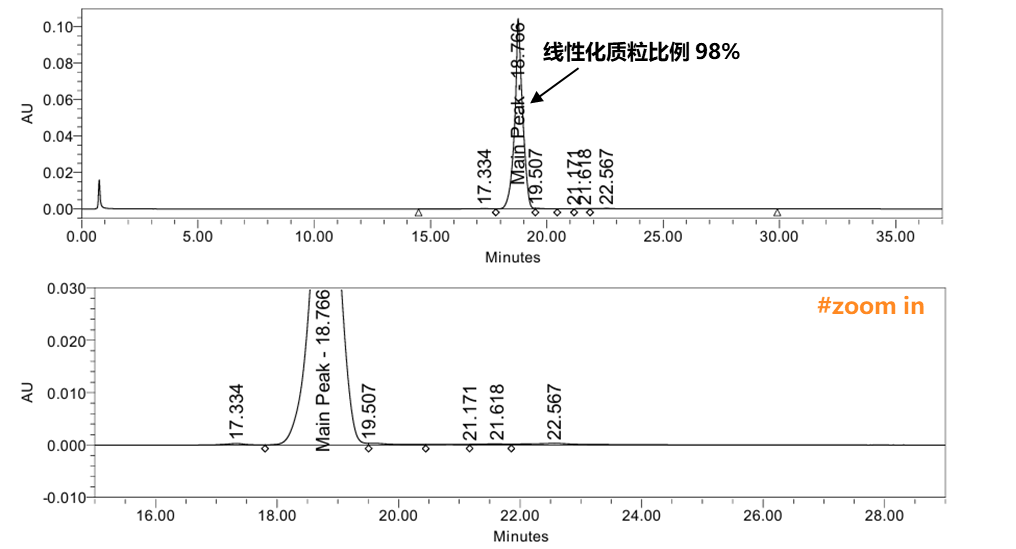
A PCV-dedicated production center ensures isolated manufacturing space to prevent cross-contamination.
02 Custom and Small-Scale
Custom small-scale equipment is configured to match the small-batch requirements of PCV production, enabling low loss and high precision.
03 Tailored Release Strategies
PCV-specific manufacturing and release strategies are designed to ensure quality and compliance while shortening production timelines.
Together, these capabilities enable faster, more targeted, and more cost-effective mRNA PCV manufacturing, accelerating clinical translation and bringing the benefits of precision medicine to more patients.
mRNA personalized cancer vaccines are becoming an accessible therapeutic reality. For patients waiting for new treatment options—whether for pancreatic cancer, melanoma, lung cancer, glioblastoma, or the many solid tumors still to come—mRNA PCVs represent a therapeutic approach they can count on and look forward to.
References
1. Investigational Pancreatic Cancer Vaccine Shows Lasting Results in Early Tri (https://www.mskcc.org/news/can-mrna-vaccines-fight-pancreatic-cancer-msk-clinical-researchers-are-trying-find-out);
2. Moderna & Merck Announce 5-Year Data for Intismeran Autogene in Combination With KEYTRUDA® (pembrolizumab) Demonstrated Sustained Improvement in the Primary Endpoint of Recurrence-Free Survival in Patients With High-Risk Stage III/IV Melanoma Following Complete Resection. (https://www.merck.com/news/moderna-merck-announce-5-year-data-for-intismeran- -in-combination-with-keytruda-pembrolizumab-demonstrated-sustained-impro autogene vement-in-the-primary-endpoint-of-recurrence-free-survival-i/);
3. Abstract CT122: First-in-human (FIH) study of EVM16, a personalized mRNA neoantigen vaccine, as monotherapy and combination with tislelizumab in advanced solid tumors. Cancer Res (2026) 86 (8_Supplement):CT122(https://doi.org/10.1158/1538-7445.AM2026-CT122)
4. The landscape for therapeutic cancer vaccines. Nature reviews drug discovery. (https://doi.org/10.1038/d41573-026-00063-z)
Reach Out Today
Contact us
If 2023 was the year mRNA cancer vaccines rekindled hope, then 2026 is the year that hope has been repeatedly reinforced by clinical data.

EPI-003, has received Investigational New Drug (IND) clearance from the U.S. Food and Drug Administration (FDA) for the treatment of chronic hepatitis B (CHB).
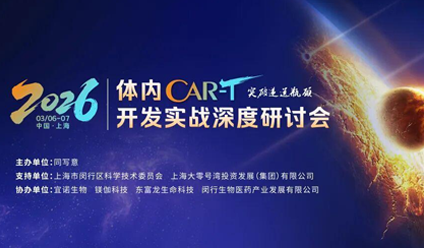
On March 6–7, the "2026 In Vivo CAR‑T Deep Dive Workshop," co‑hosted by Enorna, TONACEA, and other organizations, was successfully held in Shanghai. The workshop focused on the industrialization of in vivo CAR‑T, bringing together academic experts, industry pioneers, and investors from both viral and non‑viral delivery fields. Participants engaged in practical and in‑depth discussions on core topics including R&D innovation, CMC challenges, IND applications, and clinical translatio

Tel. +86 18961517608
E-mail. bd@enorna.com
Address.
63 Keji Avenue,
Bldg. 6, Fl. 6,
Yixing, Jiangsu, China